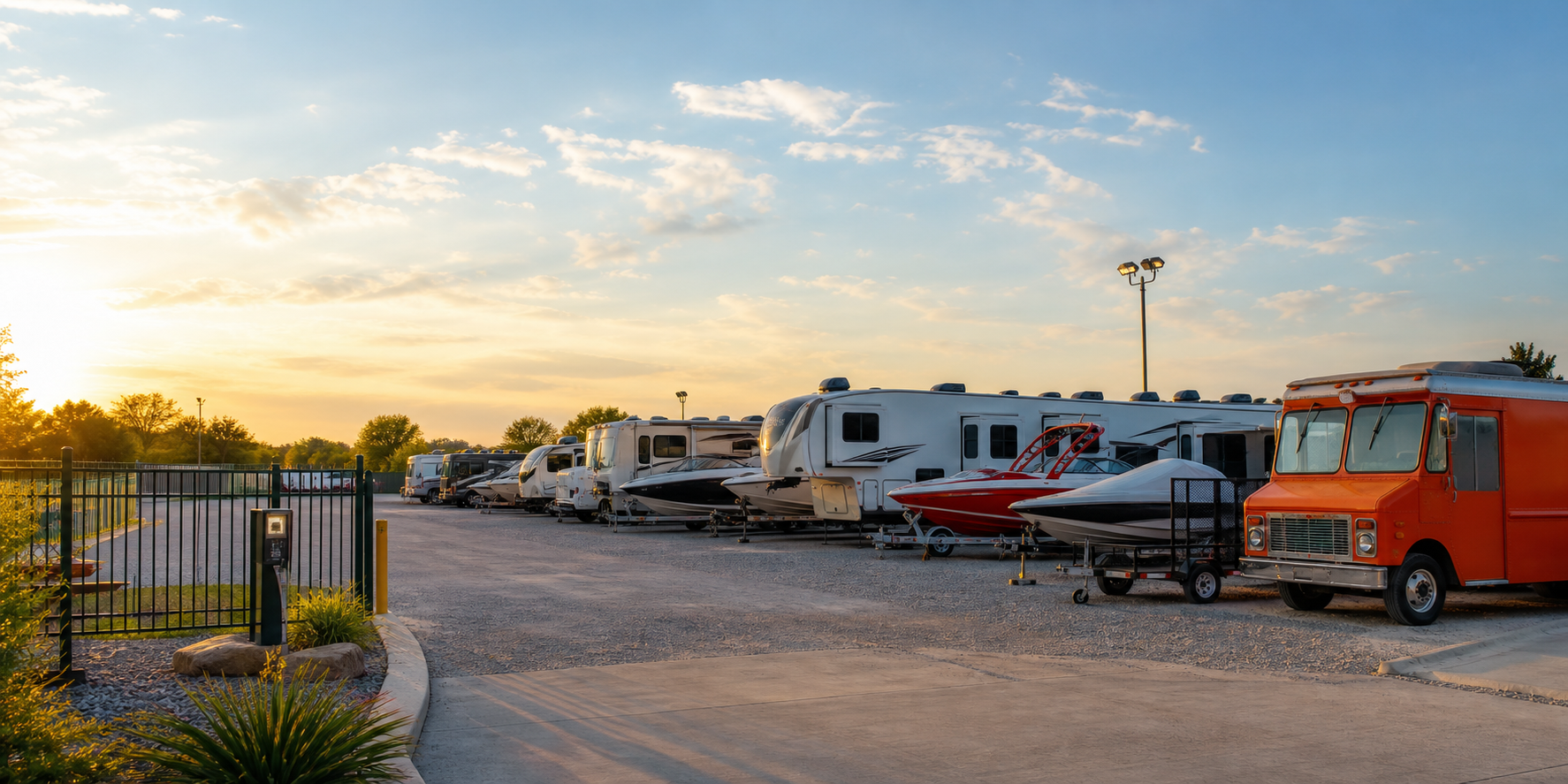
RV storage guide
What to do before parking an RV outdoors.
Outdoor RV storage is simple when the rig is measured correctly and protected before it sits.
Pay attention to the systems that dislike time, sun, and cold: water lines, batteries, tires,
seals, vents, and soft materials inside the coach.
Before move-in
- Measure bumper to hitch, including ladders, spare tires, cargo racks, and rear accessories.
- Wash the exterior so dirt and road grime do not sit against paint, decals, and sealant.
- Inspect roof seams, vents, windows, slide seals, and exterior caulking.
- Drain or winterize water lines when freezing temperatures are possible.
- Remove food, trash, and scented items that can attract pests.
While stored
- Inflate tires to the correct pressure and use UV-blocking tire covers.
- Disconnect or maintain batteries according to battery type and manufacturer guidance.
- Use a breathable RV cover if covering the whole rig; avoid trapping moisture.
- Close blinds or use windshield shades to reduce interior sun exposure.
- Visit after major storms to check covers, roof edges, tires, and locks.
Boat storage guide
How to store a boat on its trailer.
A boat stored outdoors needs drainage, airflow, battery care, and a cover that sheds water
without holding moisture against the boat. The trailer matters too: tires, bearings, lights,
winch straps, and couplers should be ready before the next lake day.
Boat checklist
- Raise the bow slightly so rainwater drains toward the stern plug area.
- Remove drain plugs where appropriate and confirm compartments are dry.
- Add fuel stabilizer or follow the engine maker's storage instructions.
- Remove or maintain marine batteries and protect terminals from corrosion.
- Use a fitted, ventilated cover instead of a loose tarp that can collect water.
Trailer checklist
- Check tire pressure, sidewall condition, and spare tire condition.
- Inspect winch straps, safety chains, coupler locks, and tie-downs.
- Look for signs of bearing heat, grease loss, or water intrusion.
- Confirm lights and wiring are protected from dragging or weather damage.
- Measure total length from trailer tongue to motor or swim platform.
Trailer storage guide
Utility, enclosed, and contractor trailer storage checklist.
Work trailers often sit loaded, so the most important checks are tires, locks, roof seams,
door seals, hitch parts, and anything inside that can leak or shift. A parked trailer should be
secure, weather-ready, and easy to pick up when the next job starts.
- Check tire pressure, valve stems, sidewalls, tread, and the spare tire.
- Lock the coupler, side doors, rear doors, ramps, and tool compartments.
- Inspect roof seams, door gaskets, floor edges, and wall penetrations on enclosed trailers.
- Disconnect small onboard batteries or maintain them if the trailer has brakes or lights.
- Keep weight balanced and avoid leaving loose fluids, fuel cans, or chemicals that could leak.
- Measure the full trailer length, including tongue, ramps, spare mounts, and rear gates.
Food truck and vehicle guide
Outdoor storage for food trucks, extra vehicles, and seasonal equipment.
Food trucks and extra vehicles need the same outdoor basics as RVs and trailers, plus extra
attention to batteries, tires, fluids, interior cleaning, and anything business-related that should
not sit in heat or cold.
- Clean interiors thoroughly and remove food, packaging, trash, and scented items.
- Check for oil, coolant, hydraulic, fuel, and wastewater leaks before parking.
- Inflate tires, use sun protection where helpful, and avoid storing on visibly damaged tires.
- Remove valuables, cash drawers, handheld equipment, and sensitive electronics.
- Start and inspect the vehicle on a schedule if it will sit for a long period.
Oklahoma storage guide
Plan for sun, wind, hail, and sudden storms.
Bethany and northwest Oklahoma City owners should prepare for intense sun, wind-driven rain,
hail season, and quick weather changes. Outdoor parking is practical, but the right prep makes
a visible difference over time.
- Confirm comprehensive insurance coverage and deductibles for hail and weather damage.
- Use tire covers, windshield shades, and UV protection for exposed rubber and interiors.
- Secure covers, awnings, ladders, ramps, antennas, and loose exterior accessories before storms.
- Do not park with active fluid leaks; repair leaks before long-term storage.
- Visit after major storms to check covers, tires, locks, roof seams, and standing water.
Space planning
How to measure before you call about outdoor parking.
The length that matters is the total parked footprint, not just the model length or box length.
Measure the farthest front point to the farthest rear point, then think about turning room and
how often you will need access.
- RVs: include hitch, bumper, ladder, spare tire, rear cargo, and tow-bar accessories.
- Boats: include trailer tongue, motor, swim platform, folded tower, and rear accessories.
- Trailers: include tongue, jack, ramps, spare mounts, rear gate, and toolboxes.
- Food trucks: include bumpers, generator boxes, ladders, racks, and service-side clearance needs.
Check availability